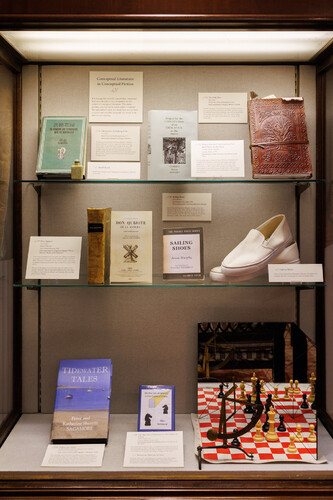
One of my 2025 resolutions was to see more exhibitions. For many years, especially when I worked in the museum field, regular visits to NYC’s many cultural institutions were simply part of the rhythm of my life. For me, a good exhibition has the same effect as travel – it transports me and leaves me changed, my brain reset and buzzing.
During the pandemic, and the intensity of early parenthood, I got out of that habit. I’m trying to reestablish it. Part of that processes has been going to check out small cultural institutions, many of which offer free or pay-what-you wish admission, like the Museum of Chinese in America. These smaller museums, some of which evolved from community archives or private clubs, offer distinctive insights not just into the subjects they focus on, but also into the history of New York City and collecting/exhibiting more broadly.
One place I’d had on my list was The Grolier Club, a bibliophile society that’s been around since 1884. I went with a friend last month to see Imaginary Books: Lost, Unfinished, and Fictive Works Found Only in Other Books.
A digital version of the exhibition is online, but it doesn’t really compare to the pleasure of seeing all those intricately crafted unreal books in person. The exhibition has already left The Grolier Club, but if you’re on the opposite coast it’s currently at The Book Club of California in San Francisco.
This exhibition was particularly fun for me as an immersive piece of metafiction: everything from Le Club Fortsas, the society who supposedly assembled the collection, to the books themselves and many of their authors, are fictional, but each didactic panel and label is written completely straight. The result is a pleasant uncanniness. As a viewer I knew the books were unreal and unwritten, and I enjoyed many of the little literary jokes in the exhibition text and design, but they felt real. It’s a playful exhibition that invites the viewer to join in the play, to enter a world of pretend that is often closed to adults.
Exhibitions are a form of storytelling in their own right, and I find them to be a rich and underutilized source of inspiration. I’m a particular fan of MoMA’s architecture exhibitions, which tend not be as overrun with tourists as the rest of the museum. Favorites over the last few years include Toward a Concrete Utopia: Architecture in Yugoslavia, 1948–1980 and Emerging Ecologies: Architecture and the Rise of Environmentalism. Architectural renderings are themselves a kind of speculative fiction, and I ended up buying the catalogue for Emerging Ecologies entirely for its architecture of the fantastic.
Imaginary Books, meanwhile, created its own reading list. The exhibition inspired me to finally read Umberto Eco’s The Name of the Rose. Afterward, I began to write something new – a short story about a traveling scribe who discovers that some unreal marginalia are very real indeed.

Leave a comment